Wat Phra That Hariphunchai Through the Rhythm of a Lamphun Visit
Wat Phra That Hariphunchai Through the Rhythm of a Lamphun Visit
A scene-led guide to worship, visual details, and the changing impressions of Lamphun’s best-known temple
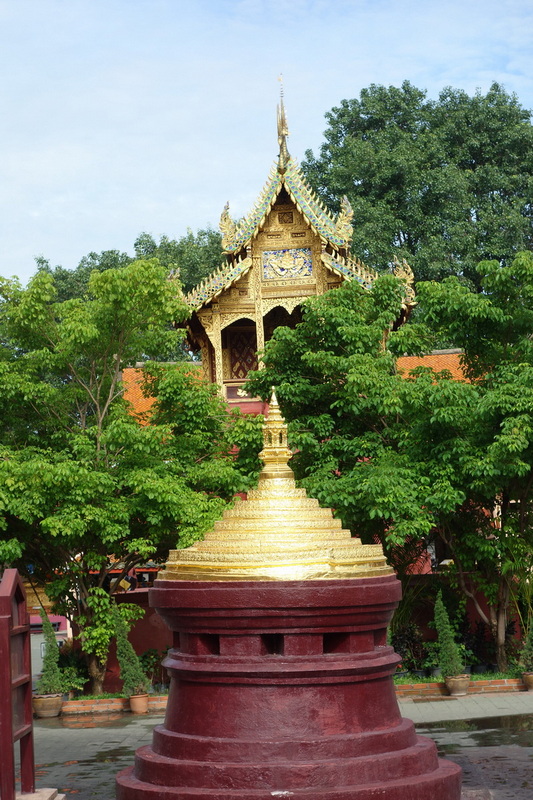
The first impression at Wat Phra That Hariphunchai may come from movement rather than architecture. A visitor steps aside as someone approaches a shrine, notices offerings being arranged, or hears the quiet change in conversation near a place of prayer. The compound is active in a practical, familiar way. People arrive with religious intentions, while travelers look more closely at the buildings and the central stupa. Both kinds of attention share the same space, but they do not have the same purpose. That difference makes Phra That Hariphunchai Temple an interesting stop for a culture-focused traveler in Mueang Lamphun District, Lamphun. The site is often identified by several names, including Phrathat Hariphunchai, Wat Phrathat Hariphunchai, and Wat Phra That Haripunchai Woramahawihan. Rather than beginning with a list of dates or a ranking of famous sites, this guide follows the experience of being present: what catches the eye first, how the compound directs attention, and what becomes clearer after observing the people who use it. Only then does the wider history come into view. This approach also shows why the temple belongs among the Top Temples In Northern Thailand without reducing it to a sightseeing label.
Begin With the People Moving Through the Compound
At the entrance, the most useful habit is to let the scene establish itself before trying to identify every feature. Some visitors move directly toward a devotional point; others pause to look around, adjust their clothing, or wait for companions. A person carrying flowers or an offering may have a very different reason for being there from someone studying the rooflines. The compound accommodates these overlapping uses, and that is one of the clearest ways to understand Hariphunchai Temple.
The visual center naturally draws attention, yet worshippers do not necessarily treat the temple as a single viewpoint. Their movements may include stopping, turning, bowing, making an offering, or sitting briefly. These actions give the grounds a human scale. They also remind a visitor that religious importance is expressed through repeated use, not only through the survival of old structures.
For travelers, this creates a valuable kind of orientation. Instead of asking immediately which building is the most impressive, notice where people slow down and where they pass through without lingering. Watch how the space is shared. Quiet observation helps reveal the difference between a ceremonial focus and the ordinary circulation around it, while avoiding the assumption that every activity is performed for visitors to interpret.
Let the Chedi Set the Visual Pace
The central chedi supplies the temple with a strong visual anchor. Its upward emphasis can be read from different points within the grounds, but its meaning is not limited to height, color, or silhouette. It concentrates attention and gives the surrounding compound a center toward which religious activity can be directed. A traveler may first notice its surface and proportions, then gradually see how other structures and pathways support that focus.
The name Phrathat Hariphunchai Temple is closely associated with this sacred stupa, and the building carries the weight of the site’s identity. It is worth looking at the relationship between the principal form and the details around it rather than treating the chedi as an isolated object. Decorative elements, devotional areas, and the arrangement of open space all affect how the central feature is approached and perceived.
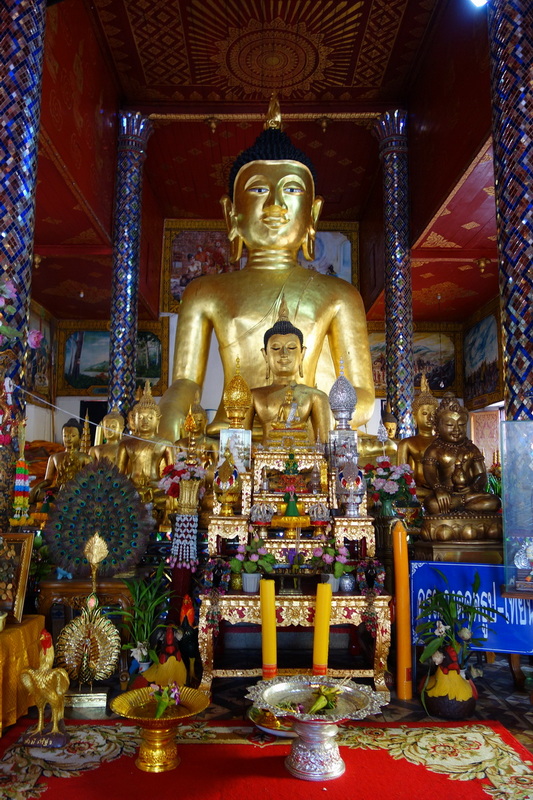
A useful visual exercise is to change position without turning the visit into a search for the perfect photograph. From one angle, the chedi may appear dominant; from another, nearby architectural lines may frame it or soften its presence. This change in perspective mirrors the temple’s two roles. It is a recognizable landmark, but it is also part of a functioning religious setting where people respond to it through practice.
Notice the Small Acts That Give the Place Its Character
The strongest impressions may come from details that are easy to overlook: the arrangement of offerings, the pause before entering a sacred area, or the care with which someone completes a familiar ritual. These moments should not be treated as performances. They are signs of personal devotion and community continuity, and a visitor can appreciate their presence without trying to explain every action.
This is also where etiquette becomes practical rather than ceremonial. Dress that is comfortable and suitably modest helps a traveler move through the site without drawing unnecessary attention. Keep voices low around worshippers, follow any instruction displayed at a particular area, and ask before photographing people or activities. Where footwear must be removed, do so because the space is being treated as sacred, not as a photographic setting. These simple choices allow the people who came to pray to retain priority.
Photography can still be part of the visit when it is secondary to awareness. Look first, then decide whether an image adds anything. A picture of a roof detail or a broad architectural view may preserve a visual memory, while photographing an individual during prayer can intrude. The distinction is not difficult when the traveler pays attention to context and accepts that some moments are better left unrecorded.
Use History as a Lens, Not the Whole Visit
Once the compound has been experienced through movement and observation, its historical setting becomes easier to place. The temple is rooted in the legacy of Hariphunchai, the historic polity associated with Lamphun, and its religious importance has continued through later northern Thai traditions. The essential point is continuity: the site has carried a sacred role across changing periods rather than belonging only to a distant chapter.
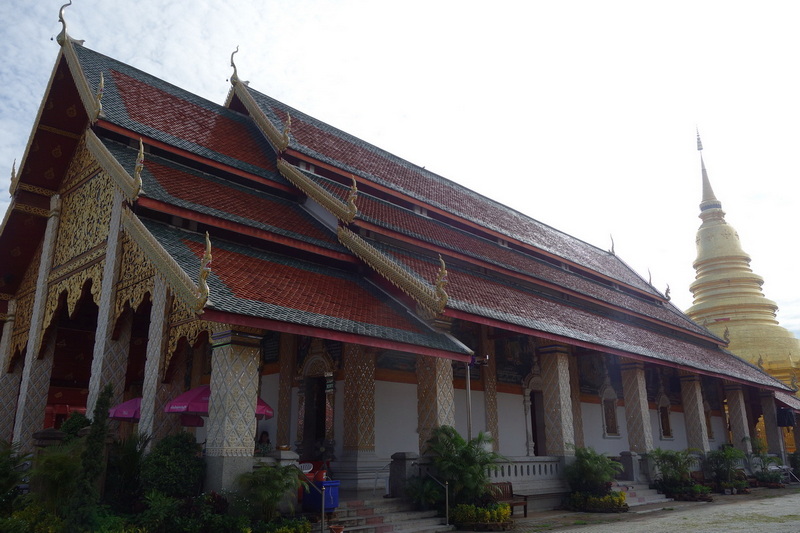
That concise history helps explain why several names remain in circulation. Wat Hariphunchai and Wat Phra That Haripunchai identify the temple in everyday and formal usage, while the name Phra That Hariphunchai Temple emphasizes its association with the principal reliquary monument. These variations are useful for orientation, but they describe one cultural site whose importance is understood through both its built form and its religious use.
In Lamphun Thailand, the temple therefore works as a point of connection between visible heritage and present-day practice. It does not require a visitor to master every historical detail before the site can be appreciated. A short historical frame is enough to sharpen the questions: why has this place remained important, how have people continued to gather here, and what does the architecture ask visitors to notice?
Read the Rest of Lamphun Through Two Different Encounters
After time at Wat Phra That Hariphunchai, nearby heritage sites can deepen the visit when they are approached as contrasts rather than as items on a checklist. The Queen Cham Dhavi Monument shifts attention toward remembrance of a historical figure and the way public memory is given a visible form. Its presence encourages a different kind of looking: less centered on a sacred architectural complex and more focused on how a community expresses historical identity.
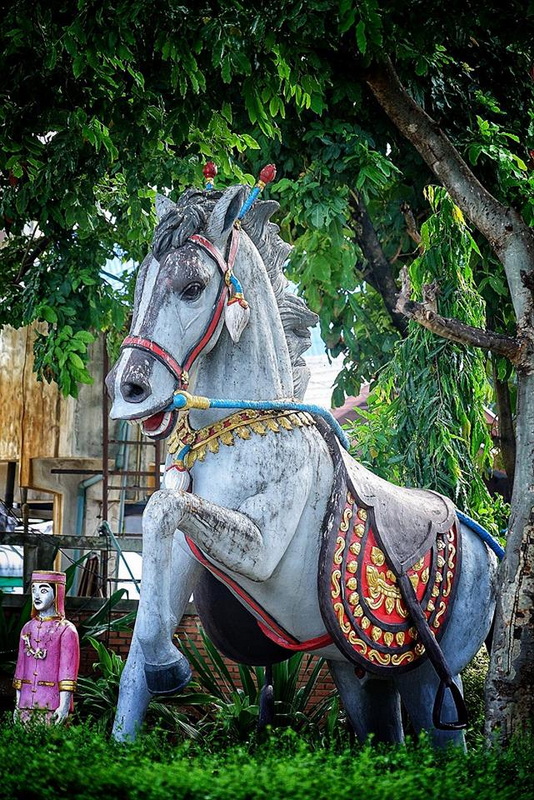
Wat Phra Yuen offers another change of emphasis. Moving from one temple setting to another makes it possible to compare atmosphere, layout, and the ways visitors occupy religious space. The value lies in noticing differences instead of declaring one place more important. One site may make the visitor think about a principal stupa and concentrated devotion; the other can prompt attention to another arrangement of worship, architecture, and local familiarity.
Together, these nearby stops extend the original encounter without repeating it. The Queen Cham Dhavi Monument brings historical memory into sharper focus, while Wat Phra Yuen keeps the conversation within the world of Buddhist architecture and practice. Returning mentally to the first temple after these visits may reveal that its significance is not carried by one structure alone, but by the relationships between movement, memory, and belief across Lamphun.
Nearby Attractions
Queen Cham Dhavi Monument
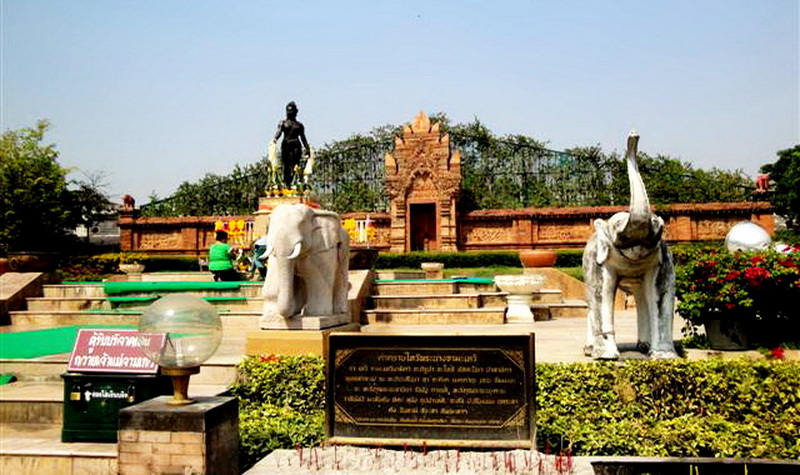
The Queen Cham Dhavi Monument provides a useful counterpoint to the temple visit. Its purpose directs attention toward a remembered historical person rather than toward the repeated acts of worship visible inside a temple compound. Seeing both places encourages travelers to distinguish between religious observance and civic or historical remembrance, while recognizing that each contributes to how Lamphun understands its past.
Wat Phra Yuen
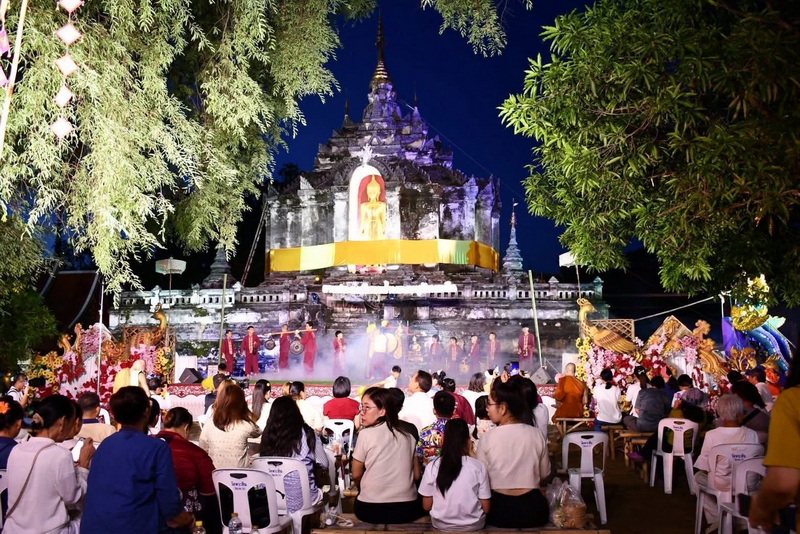
Wat Phra Yuen extends the architectural comparison without requiring the same kind of focus as the principal temple. Visitors can consider how another Buddhist setting organizes attention, movement, and quiet activity. The comparison is most rewarding when based on direct impressions—scale, atmosphere, and the way people use the grounds—rather than on a race to collect similar-looking buildings.
Bringing the Experience Together
A visit to Wat Phra That Hariphunchai may begin with the height of its chedi , but it can end with a smaller observation : someone pausing with care , an offering placed quietly , or a shared space adjusted around an act of prayer . That moment changes the way the architecture is read . The stupa is no longer only a landmark to identify ; it becomes the visual center of a place whose meaning is renewed by the people who come there . For a traveler in Mueang Lamphun District , Lamphun , that shift is a useful takeaway . The temple’s history provides context , its design gives the eye a direction , and its daily use supplies the clearest evidence of why it matters . The nearby Queen Cham Dhavi Monument and Wat Phra Yuen then broaden the visit through different forms of memory and religious space .


Comments
Post a Comment